

Jackson Hole • Snake River • Grand Teton • Yellowstone • Paradise Valley
Two parks. One legendary road trip. Grand Teton and Yellowstone share a border and together make up one of the most spectacular road trip destinations in the world. Add Jackson Hole for a proper Western-town kick-off, a morning on the Snake River, and a secret exit through Montana’s Paradise Valley, and you’ve got a 7-day itinerary that most guides aren’t building this way.
Most blogs route you Bozeman → Yellowstone → Grand Teton. We flip it.
Starting in Jackson Hole means you build south-to-north, and it puts Teton Whitewater’s Snake River trips exactly where they belong: on Day 2, before the parks begin, giving you a water-level view of the Tetons or the Snake River Canyon you won’t get from any trailhead.
💡 Planning Basics: 7 days is the sweet spot. Each park charges a $35/vehicle entrance fee, or grab the $80 America the Beautiful Annual Pass if you’re hitting multiple parks this year. No timed-entry reservations are required at either park, but lodging inside both books out months in advance. Start there first.
Day 1 — Arrive in Jackson Hole
Fly into Jackson Hole Airport (JAC), one of the only commercial airports inside a national park boundary. The Tetons are already in the windshield on landing.
Spend the afternoon on the Jackson Town Square, framed by four iconic elk antler arches sourced from the nearby National Elk Refuge. Grab dinner at Snake River Brewing Co. or Local Restaurant & Bar. Tonight is your last reliable cell signal for several days, so download offline maps, screenshot your reservations, and pick up bear spray at an outfitter in town if you didn’t pack it.
Day 2 — Snake River with Teton Whitewater
Before driving into Grand Teton, spend your first full day on the Snake River. It sounds counterintuitive, but getting a water-level angle on the Teton Range before you hike among the peaks changes how you see everything that follows.
Teton Whitewater has been running the Snake for over 30 years and offers two trips:
- Whitewater Trip: 8 miles through the Snake River Canyon, including Class III rapids Lunch Counter and Big Kahuna. About a 3-hour round trip, starting at $99. Fun for the whole group, guides trained in Swiftwater Rescue and Wilderness First Aid.
- Scenic Float: Calm water, views of the Teton & Snake River mountain ranges, and possible wildlife sightings: moose in the willows, bald eagles, osprey, and beavers. The early morning float is best for wildlife. Perfect for families with young kids or anyone wanting a mellow experience.
🚣 Book Ahead: Summer dates fill fast! All gear and transportation included.
Days 3 & 4 — Grand Teton National Park
Grand Teton is not the appetizer before Yellowstone. The Teton Range rises more than 7,000 feet above the valley floor with no foothills to soften it, one of the most dramatic mountain frontages on the continent. Two days covers it well.
Must-See Stops
- Jenny Lake: Take the shuttle boat across and hike to Hidden Falls and Inspiration Point (about 2 miles from the dock), or do the full 7-mile loop. Arrive by 8 a.m. in summer, the lot typically fills completely by 10.
- Snake River Overlook: Where Ansel Adams made one of the most iconic landscape photographs in American history. Still looks exactly the same.
- Schwabacher Landing: A short dirt road off US-89 leads to beaver ponds with the best Teton reflection shot in the park. Worth the detour. Magical at sunrise.
- Oxbow Bend: Best early-morning wildlife and photography spot in the park, with moose, bald eagles, osprey, and Mount Moran as a backdrop.
- Signal Mountain Road: The only aerial view of the Jackson Hole valley in the park. Short drive to the summit, big perspective shift.
Pro Tip: Schwabacher Landing or the Snake River Overlook within 45 minutes of sunrise = Teton photos that look like a magazine cover.
Days 5 & 6 — Yellowstone National Park
Yellowstone is shaped like a figure-eight with two loops; understanding this before you arrive saves real time. The Lower Loop (south) holds Old Faithful, Grand Prismatic Spring, the Grand Canyon of the Yellowstone, and Hayden Valley. The Upper Loop (north) is where Mammoth Hot Springs and Lamar Valley live.
Do the Lower Loop first, then north.
Lower Loop Highlights
- Grand Prismatic Spring: Go before 9 a.m. The steam clears as it warms up. Hit the boardwalk AND the overlook trail for the aerial rainbow-pool view.
- Old Faithful: Check eruption predictions on the NPS app. Walk the Upper Geyser Basin loop, it’s the densest concentration of active geysers on Earth.
- Grand Canyon of the Yellowstone: Don’t just look from the rim. The Brink of the Lower Falls trail drops you to a platform at the top of the 308-foot waterfall. The sound alone is worth the climb back up.
- Hayden Valley at dusk: Hundreds of bison. Grizzly bears on the valley edges in early summer. Drive slowly.
Upper Loop Highlights
- Mammoth Hot Springs: Stacked travertine terraces reshaping themselves in real time. Hike the Lower Terraces boardwalk, nothing else in the park looks like this.
- Lamar Valley: The best wildlife-viewing area in the entire park. Bison are essentially guaranteed; wolves and bears are possible with binoculars and patience. Bring both. If you see a cluster of cars with spotting scopes pointed in the same direction, stop. That’s almost always worth joining.
🐺 Wildlife Rule: 100 yards from bears and wolves. 25 yards from bison. Never leave boardwalks near thermal features, the ground is thin and the water is boiling.

Pro Tip: Exit Through Paradise Valley, Montana
Here’s what almost nobody tells you. If your itinerary ends on the Upper Loop, you exit Yellowstone through the North Entrance at Gardiner, Montana, and from there, Highway 89 north into Paradise Valley is one of the most beautiful drives in the American West.
The Yellowstone River winds 50 miles between the Absaroka and Gallatin ranges. It’s wide-open, pastoral Montana; it’s the valley that inspired the Yellowstone TV show. About 24 miles north of Gardiner sits Emigrant, a tiny town at the base of 10,000-foot Emigrant Peak. Four miles off the highway from there: Chico Hot Springs Resort in Pray, Montana.
Chico has been operating since 1900 and is on the National Register of Historic Places. Two naturally heated geothermal pools. One of the finest dining rooms in Montana. A lively saloon that often has live music. Day passes to the pools don’t require a reservation. After six days of hiking, rafting, and driving, soaking here with the Absarokas turning orange in the evening light is the perfect way to close this trip.
⭐ Route Tip: Take Route 540 (the East River Road) instead of Highway 89 between Emigrant and Gardiner for a quieter drive along the Yellowstone River with even better mountain views. Adds a few minutes, completely changes the feel. From Chico, it’s about 70 miles north to Bozeman Yellowstone International Airport (BZN), a natural endpoint for a one-way Jackson-to-Bozeman routing.
The people who leave this trip already planning a return visit are the ones who got out of the car and into the landscape. The Snake River gives you a Teton perspective most visitors never experience. Lamar Valley at dawn with binoculars gives you a Yellowstone that no boardwalk will. And Chico Hot Springs in Paradise Valley is the kind of trip-ending moment that cements the whole thing.
Plan the parks. Plan the river. And don’t skip the hot springs on your way out.

Quick FAQs
Grand Teton or Yellowstone first?
Match it to your airport. Flying into Jackson Hole (JAC)? Start Grand Teton, head north to Yellowstone. Flying into Bozeman (BZN)? Flip it. Yellowstone first, south to Grand Teton, out through Jackson.
Should I split my lodging between Grand Teton and Yellowstone?
Is rafting OK for families and beginners?
The scenic float is appropriate for anyone age 4 and up with calm water, wildlife-focused, no whitewater. The canyon trip runs Class III rapids and has minimum age requirements. Check tetonwhitewater.com at booking. Both include all gear and transport.
Best time to visit?
Memorial Day through late September for all roads open and good rafting conditions. July–August is peak season so be sure to book lodging 4–6 months out. September is the sleeper pick: fewer crowds, elk bugling in the meadows, and the Tetons starting to go gold.
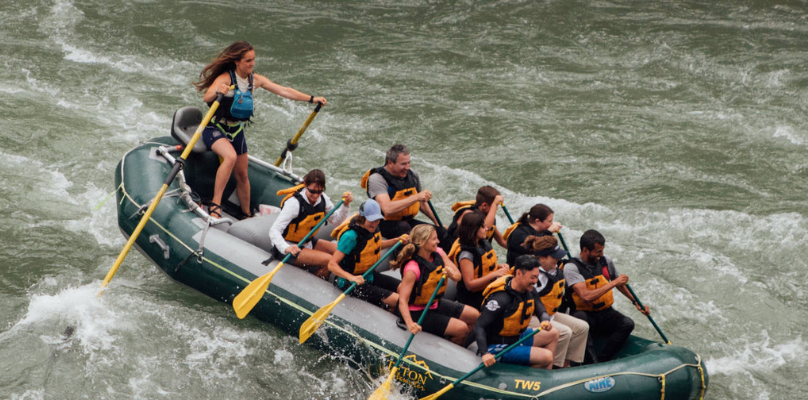
Classic Whitewater Rafting
Classic Snake River whitewater rafting aboard a standard raft for up to 16 people. Great for families, groups, and first-time rafters.
Learn More
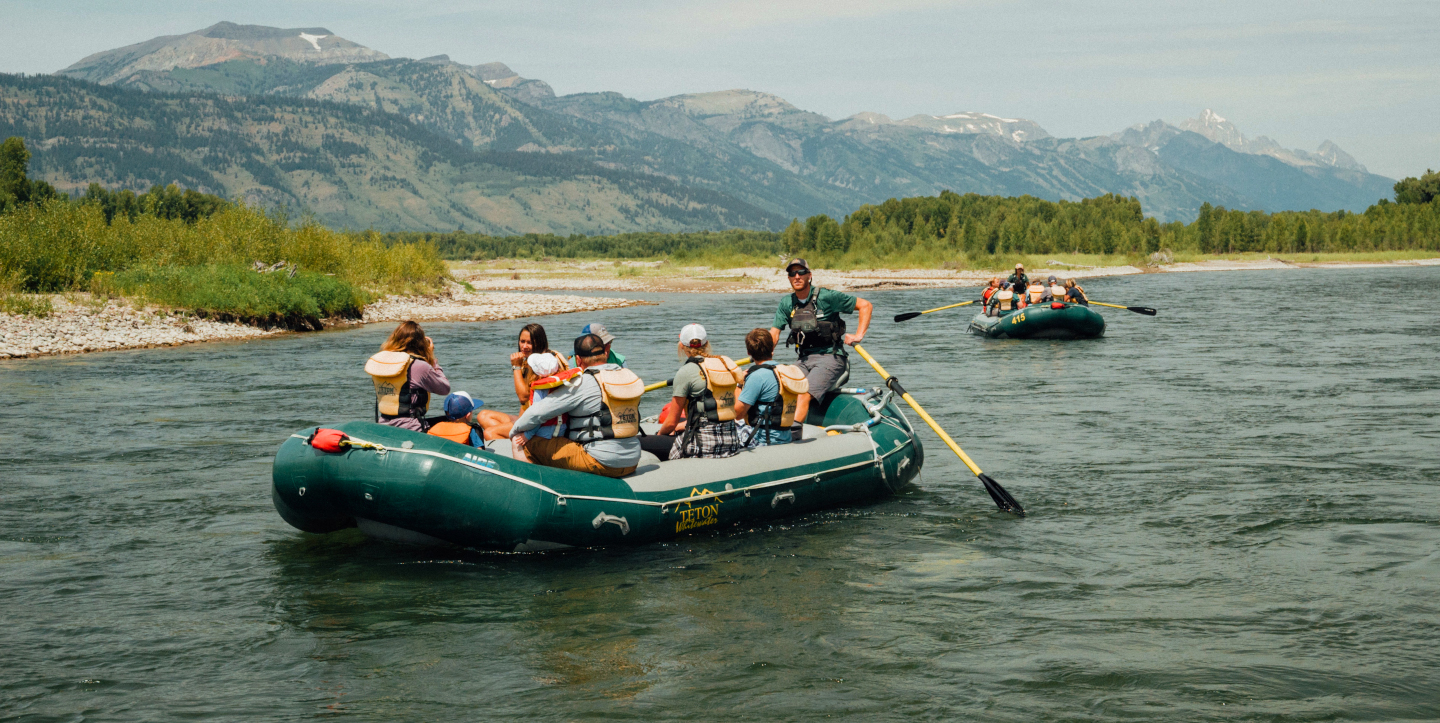
Wilson Scenic
A relaxing Snake River scenic float trip in Wilson & Jackson Hole with views of the Snake River range and the Tetons!
Learn More
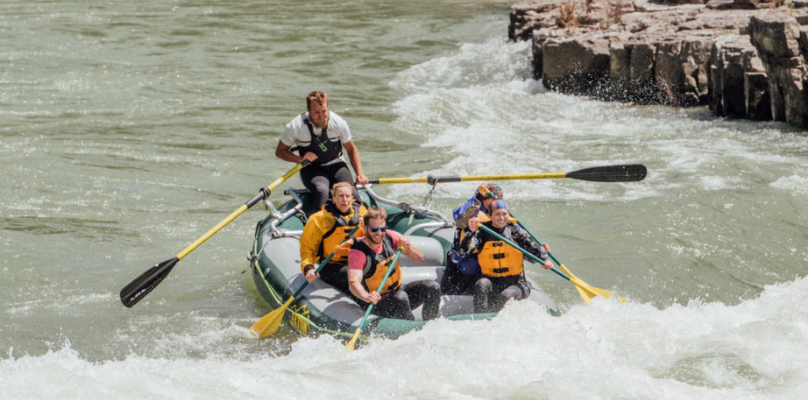
Small Boat Slam Whitewater
Maximum thrills in an 8-person paddle raft that puts you closer to every wave, splash, and rapid.
Learn More